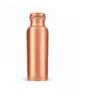
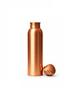
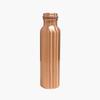
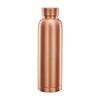
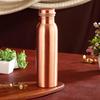
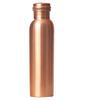
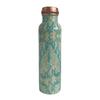
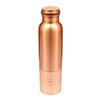
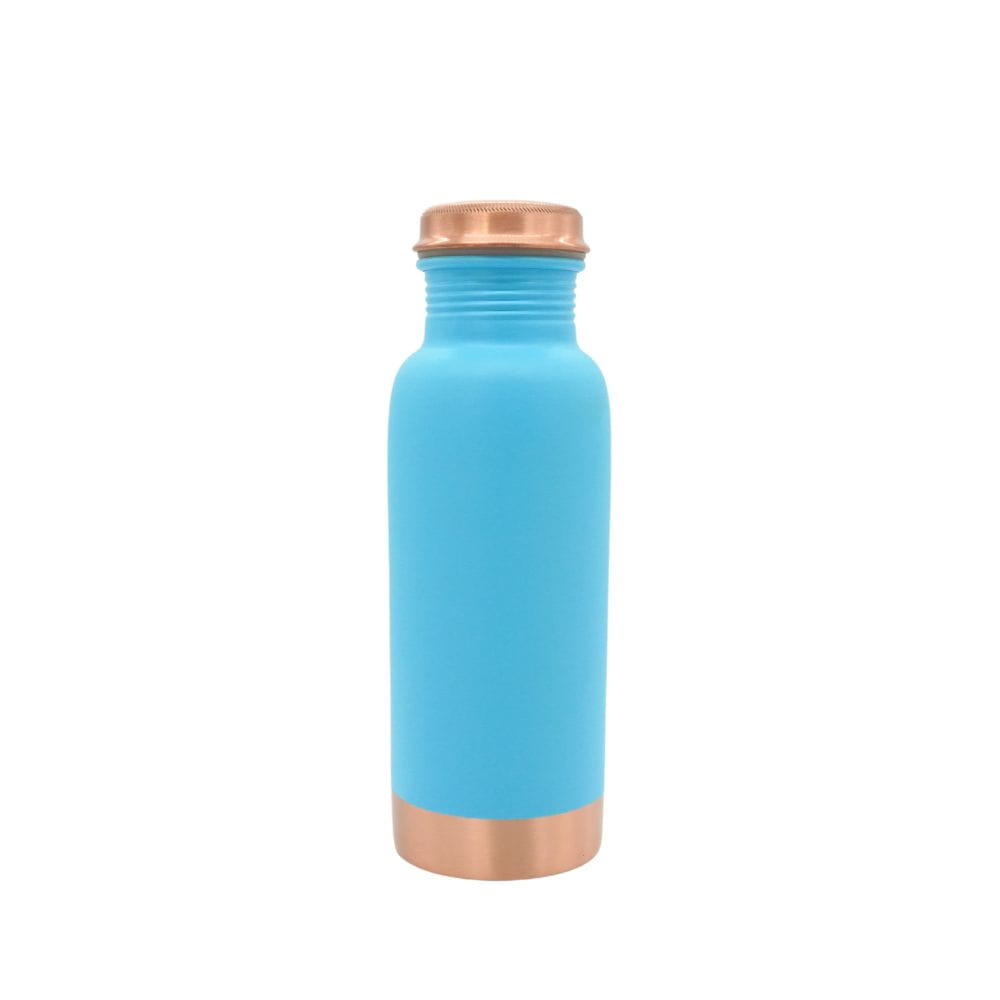
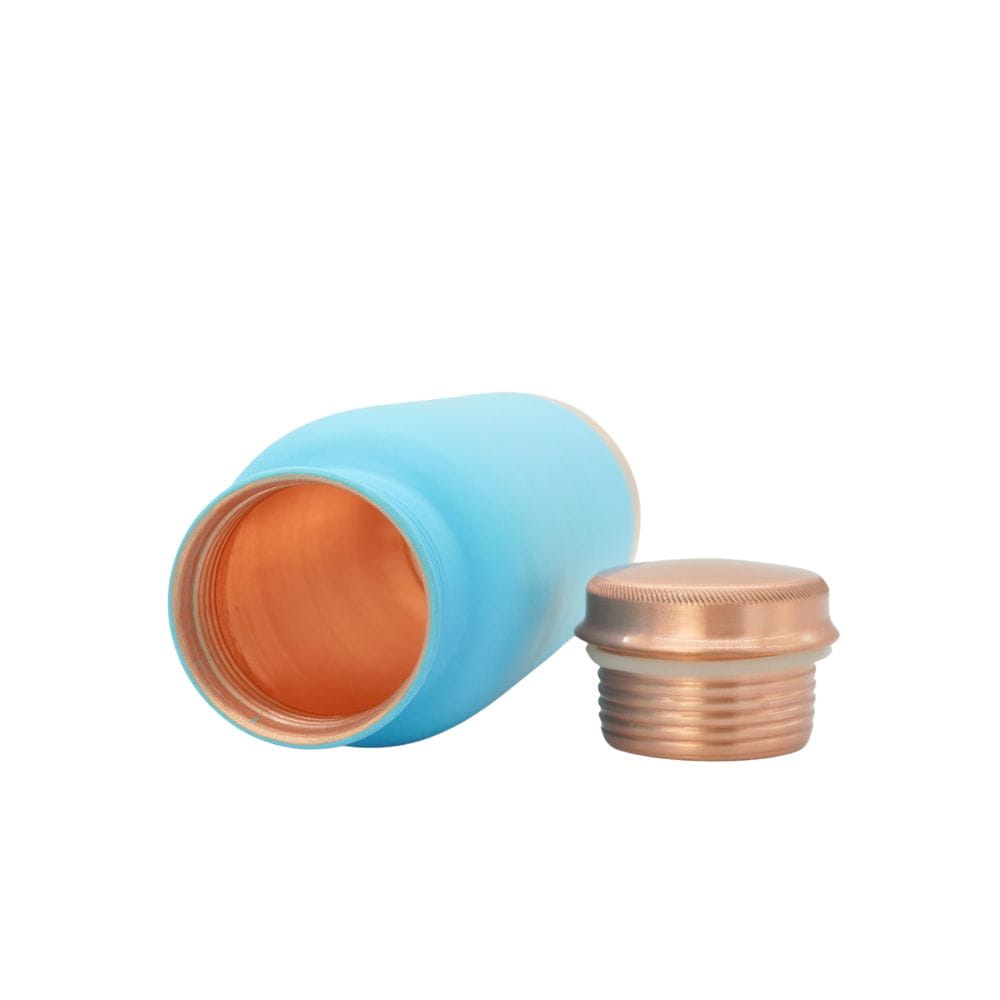
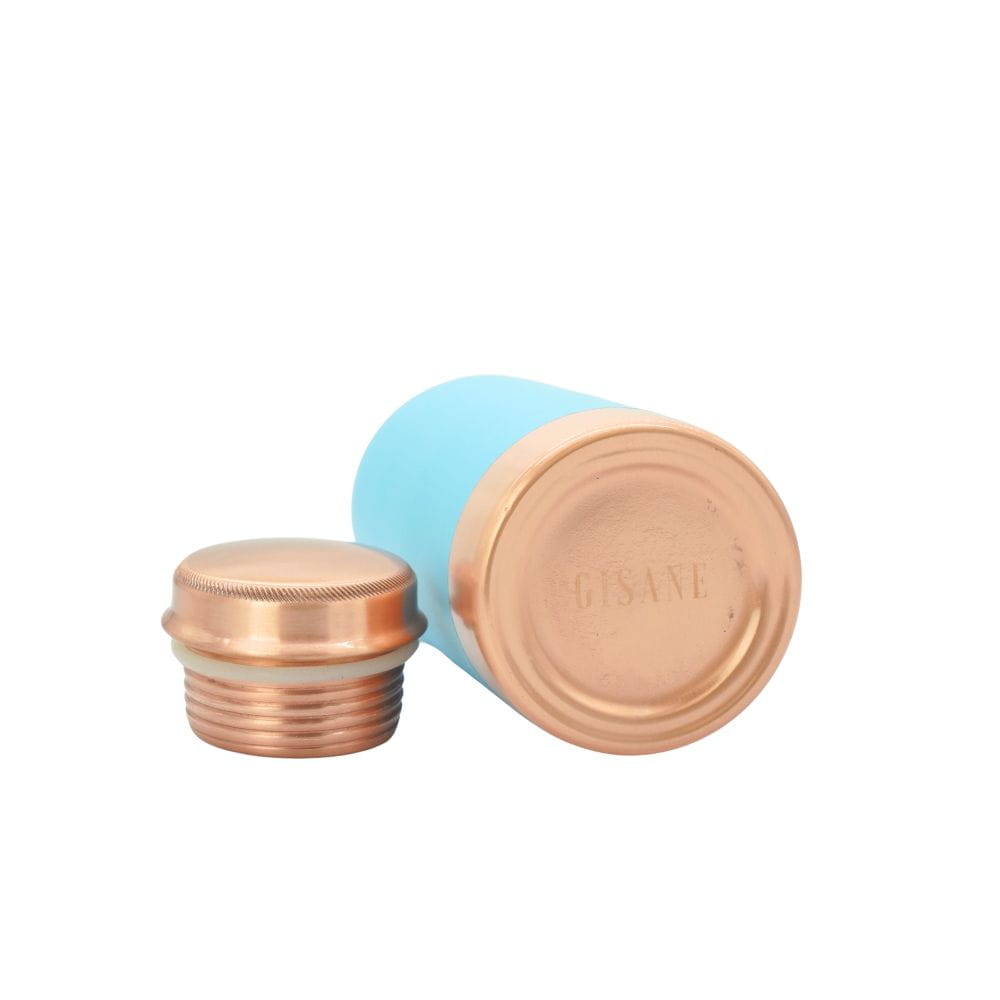
Gisane Sweet Copper Bottle 650 ml. This unique copper bottle, with a blue exterior, features a convenient shape and 650 ml capacity, making it the perfect companion for both physical activity and everyday use. The copper from which it's made has been laboratory-tested and certified for its high quality. How to use a copper water purification vessel: The water purification process itself is very simple. After the first wash, fill the vessel with cold or lukewarm tap or filtered water and leave for at least 4 hours. It's best to leave the water in the copper vessel overnight. The amount of water should be adjusted to your daily water intake, so as not to exceed it. We recommend one glass in the morning on an empty stomach and one glass before bed. During the day, we recommend drinking according to your needs and daily rhythm. Children should not drink water until they are 3 years old. How to care for copper cookware? Copper cookware should be cared for just like any other kitchen cookware, meaning it should be kept clean by washing and sanitizing regularly. Green stains should not be allowed to form on the cookware. This stain should be removed regularly before a green discoloration appears. This ensures maximum efficiency of the copper cookware, but using dirty cookware is harmful. The easiest way to keep copper cookware clean is to wash it regularly. We recommend washing copper cookware with a soft sponge or cloth twice a week using a solution of salt water, lemon juice, or vinegar. (Using vinegar and not rinsing thoroughly may result in a metallic taste in the water.) Copper darkens when exposed to moisture and air. Initially, small spots appear, which over time will lead to a complete discoloration. Depending on the water composition, these changes may occur at different times. This is a natural process, and color change is inevitable. You can lighten dark spots and stains by extending the contact time of the copper with the mixture during washing. Dark stains do not affect the function of the copper cookware. The cleaning mixture proportions are: 100 ml of water - 2 teaspoons of salt - juice of ¼ lemon. Adjust the proportions to the size of the cookware being cleaned. Depending on the degree of soiling, the solution can be more or less diluted. Dissolve the salt in advance to prevent salt lumps in the water. The water can be warm or cold. Adjust the contact time of the copper with the solution to the desired effect. If a noise occurs when opening or closing the bottle, simply apply a little oil or olive oil to the cap. Activities that can damage copper cookware include: Using cookware for hot or carbonated water, or storing beverages other than water. Cleaning copper cookware with hard, sharp scouring pads, such as wire sponges. Washing copper cookware in the dishwasher. Lack of regular cleaning or washing with water only. Leaving fruit acids on the copper surface (inside and out) or not wiping it dry after washing is important! The previously mentioned discoloration due to oxidation and contact with water is a natural process resulting from the properties of copper. It does not affect the functionality of the product and does not constitute grounds for complaint. Copper and its properties: Copper is a metal with antiseptic properties. It is an element whose presence is essential for the human body. Copper can be supplied by eating nuts and seeds or by drinking water stored in copper vessels. This may affect, among other things: Digestive system - copper increases the absorption of nutrients from food and helps stimulate intestinal peristalsis. It facilitates digestion. Drinking from copper vessels also helps kill harmful bacteria. Immune system - copper is known for its remarkable antibacterial, antiviral, and anti-inflammatory properties. It is particularly effective against E. coli and S. aureus, two bacteria that are common in our environment and are known to cause serious illnesses in the human body. Recent studies have shown that storing water in a copper vessel significantly reduces the risk of bacterial contamination. Copper water vessels have been used for centuries in countries around the world (e.g., India). Weight Loss – In addition to improving digestive function and building a strong immune system, drinking water from a copper vessel will help the body eliminate excess fat. Combined with a healthy diet and regular physical activity, drinking from a copper vessel can be a safe and natural way to maintain a healthy weight. Aging – Water stored in a copper vessel is packed with antioxidants, aids in the production of new skin cells, and fights free radicals. Circulatory System – Helps minimize the risk of heart disease and lowers cholesterol. Copper helps prevent plaque buildup in the arteries and dilates blood vessels to allow for better blood flow to the heart. Thyroid Gland – Copper is one of the most important minerals and is essential for proper thyroid function. Drinking water from a copper vessel helps combat copper deficiency and regulates thyroid function. Brain function – copper helps the mind work faster and more efficiently. The brain works by transmitting impulses from one neuron to another through an area known as synapses. These neurons are covered with a myelin sheath, which acts as a kind of conductive medium. Copper helps synthesize materials necessary for the formation of myelin sheaths. Maintaining healthy skin and fighting acne – copper is a key ingredient in the production of new cells, which help replenish the upper layers of the skin. Experts say that regularly drinking water stored in copper vessels, especially early in the morning, can play a crucial role in skin health. Key product features: Material: Certified copper with over 99% copper content Finish: Color-coated Packaging: Eco-friendly fabric bag Quality control Bottle specifications: Capacity: 650 ml Height: 21 cm Diameter: 7.5 cm Weight: 230 g Brand: Gisane Country of origin: India As these products are handmade, they may vary in size and weight. They may have minor imperfections such as small stains, discoloration, minor scratches or other traces of handicraft that do not affect the functionality of the product.


 Niet geleverd, dan geld terug