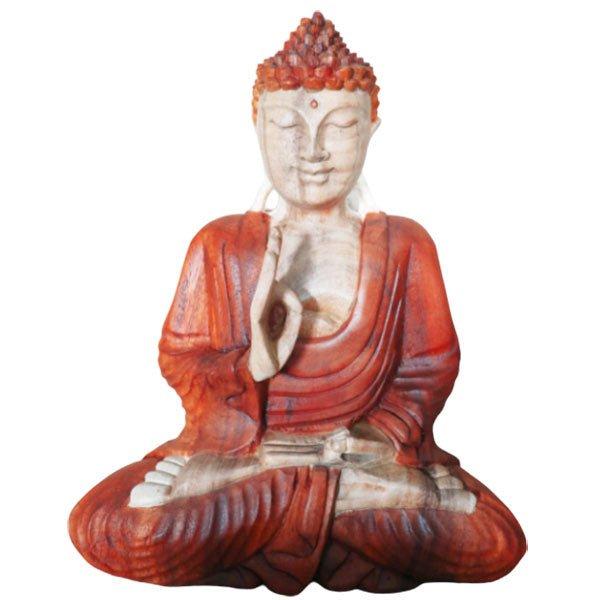
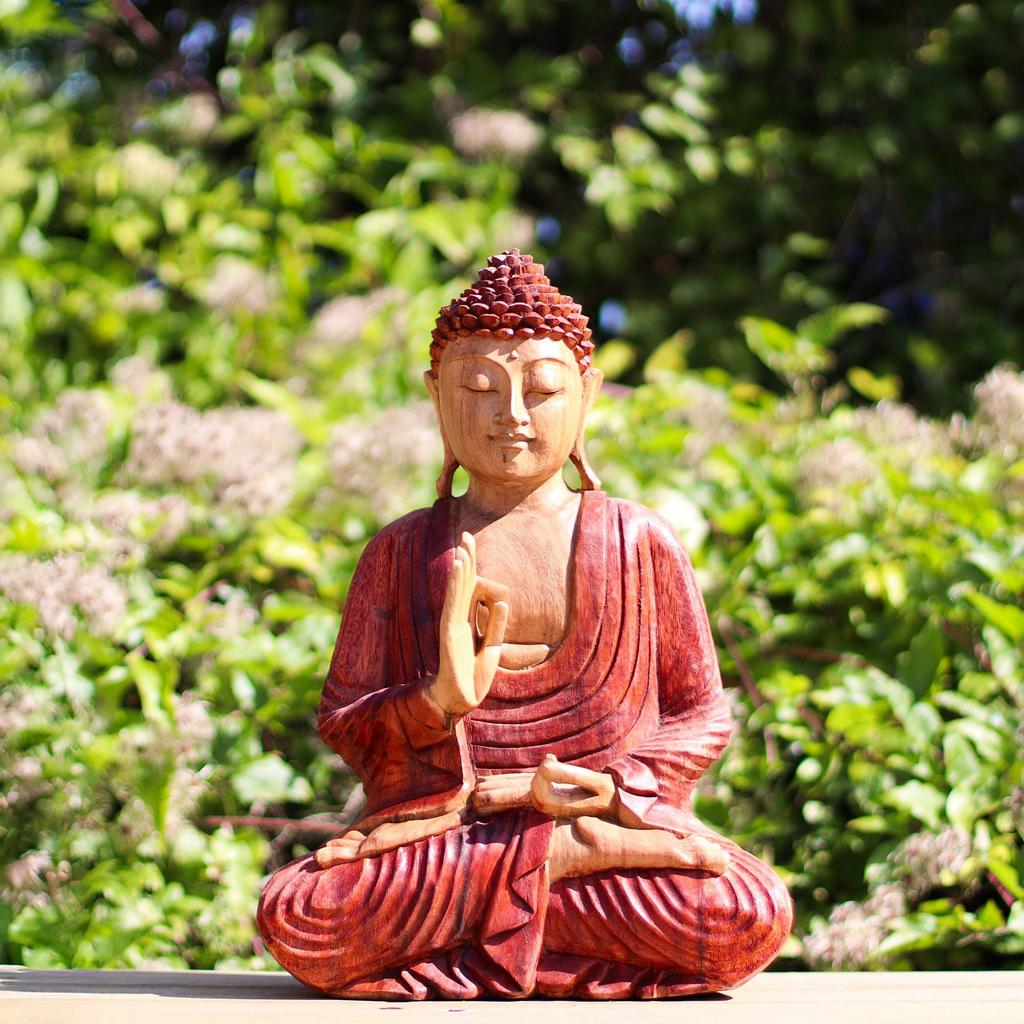
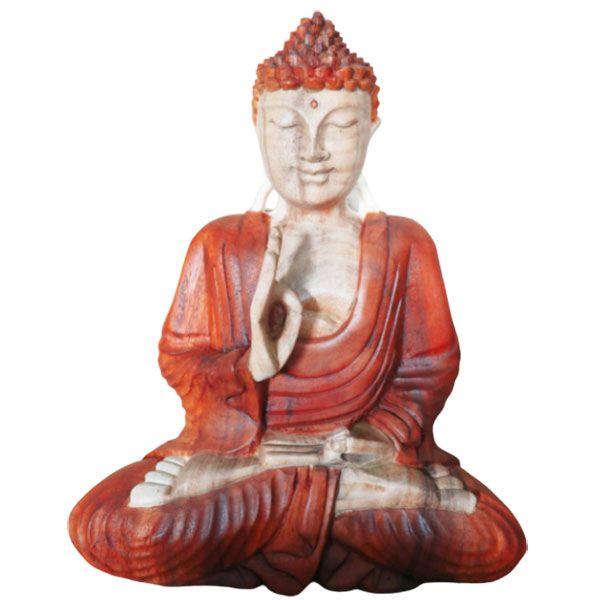
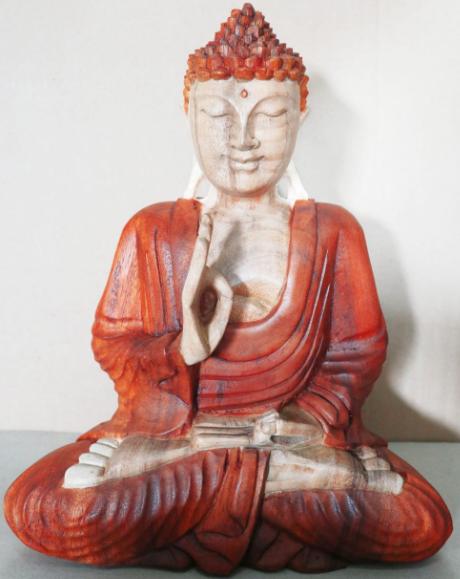
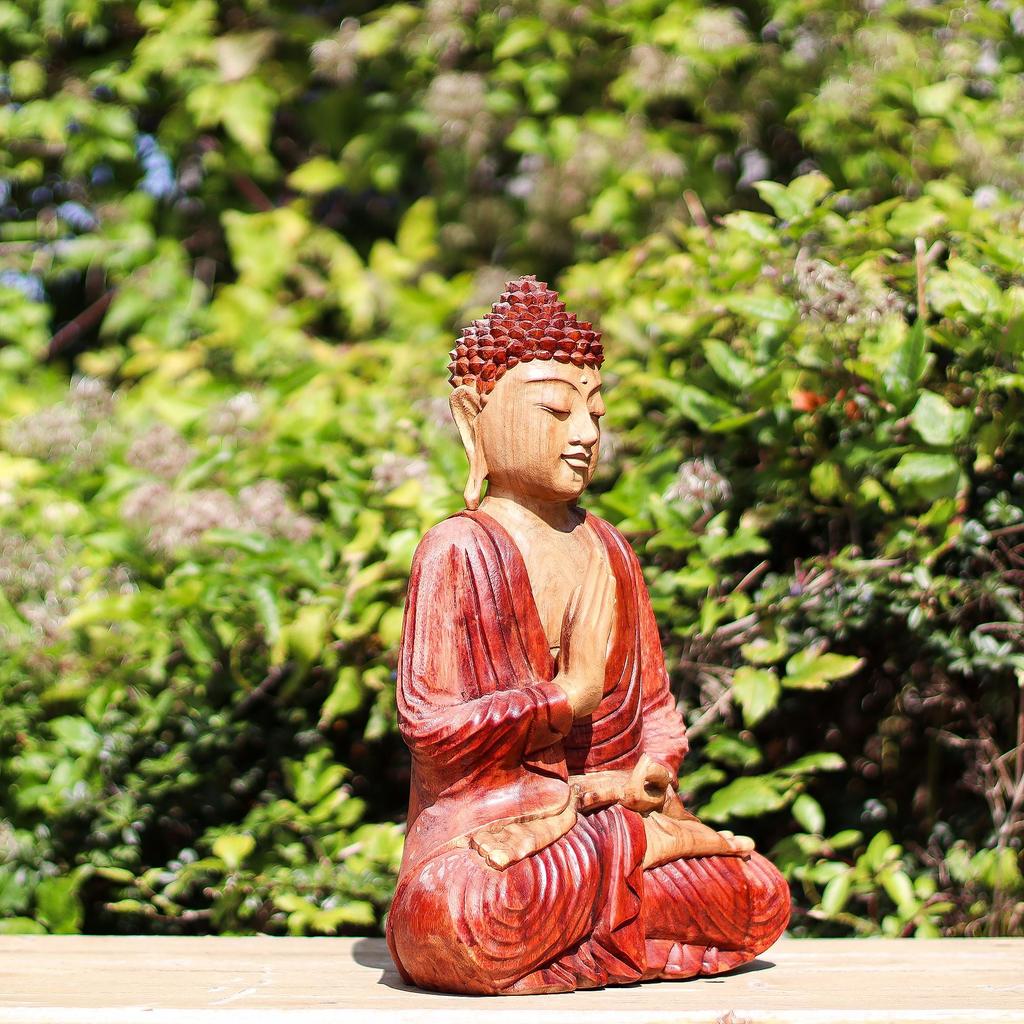
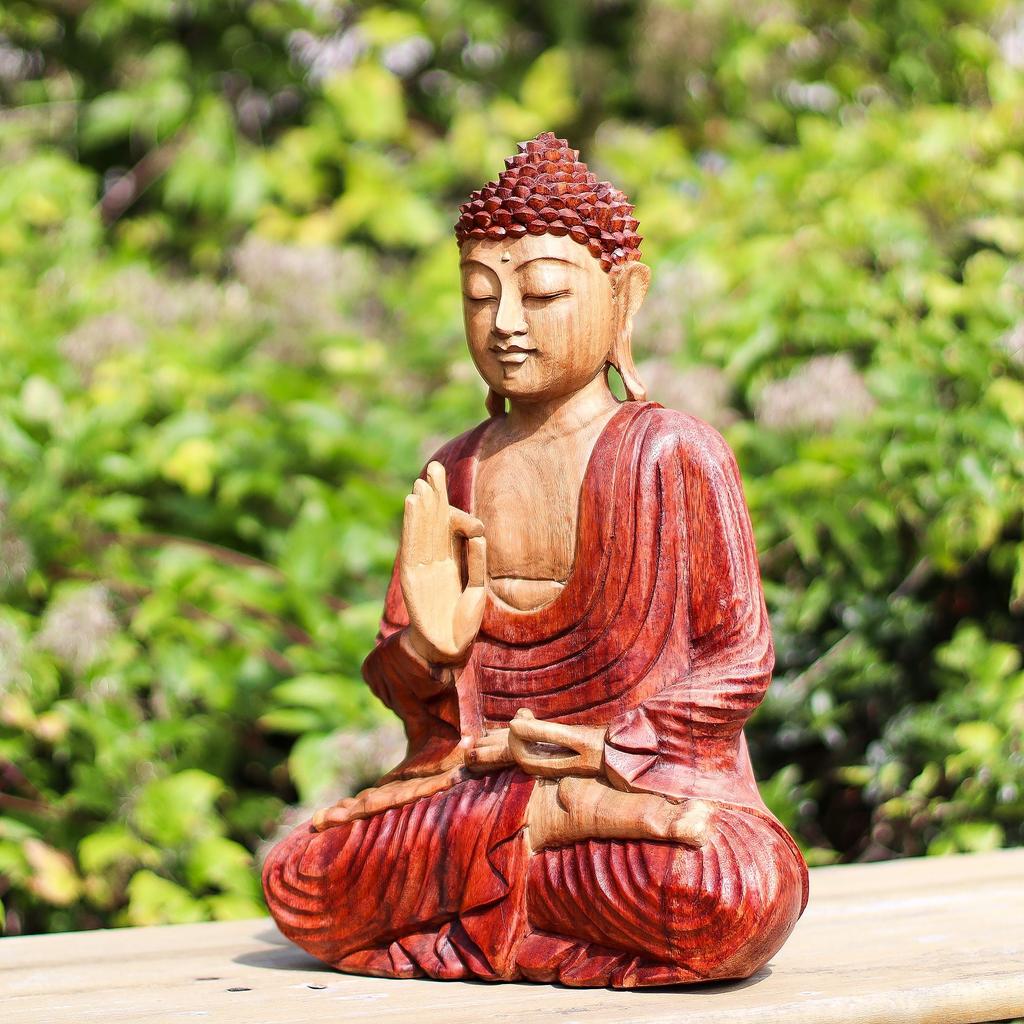
Een handgesneden suarhouten Boeddhabeeld geeft een kamer een rustig middelpunt, waarbij de leerhouding een gevoel van stilte en aandacht brengt op een plank, altaar of meditatieruimte.. Het natuurlijke hout geeft het een warme in plaats van formele uitstraling, waardoor het gemakkelijk te combineren is met planten, boeken, textiel en zacht avondlicht.
De onderwijshouding en de betekenis ervan
De zittende vorm creëert een stabiele, gecentreerde aanwezigheid zonder stijf aan te voelen.
De onderwijshouding wordt in de boeddhistische iconografie geassocieerd met het delen van wijsheid en het richten van de aandacht op begrip.
Het past op een persoonlijk altaar, een yogaruimte, een leeshoek of een rustige plek bij de ingang van het huis.
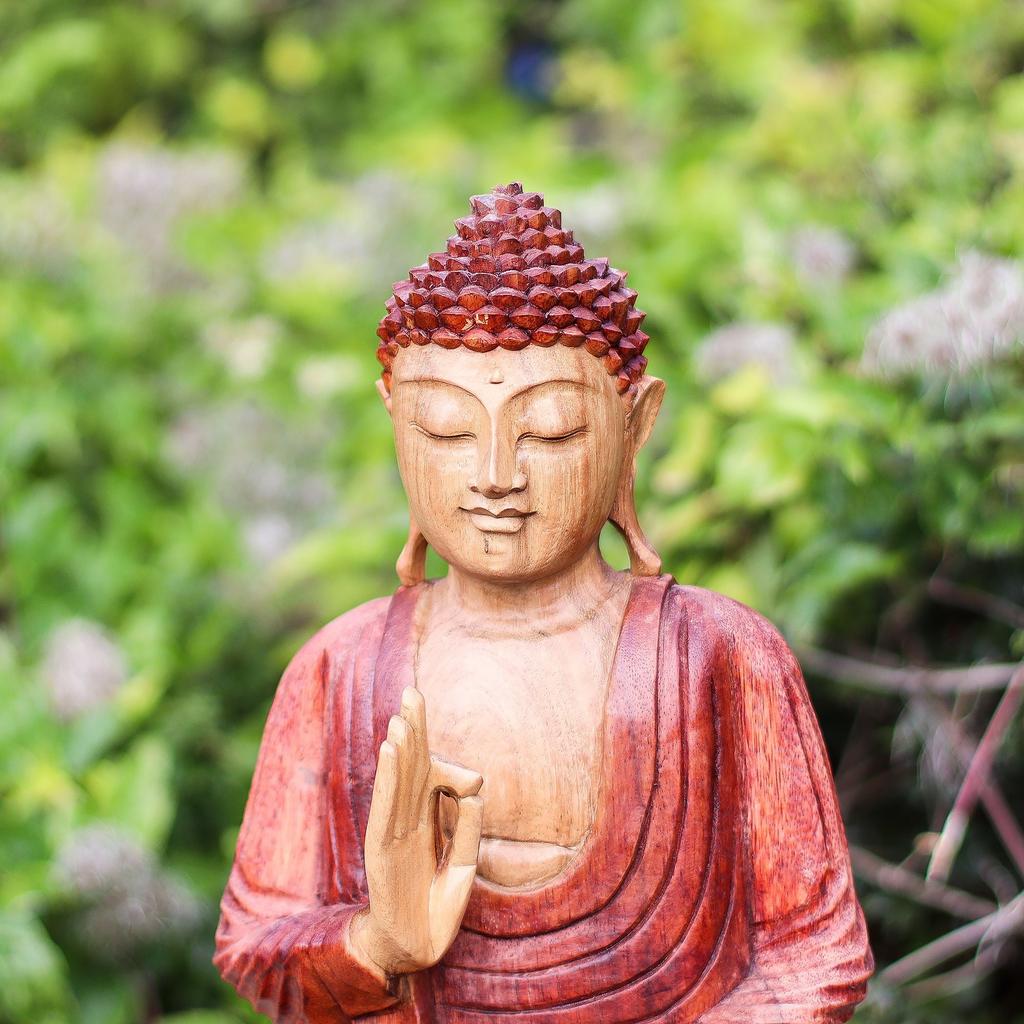
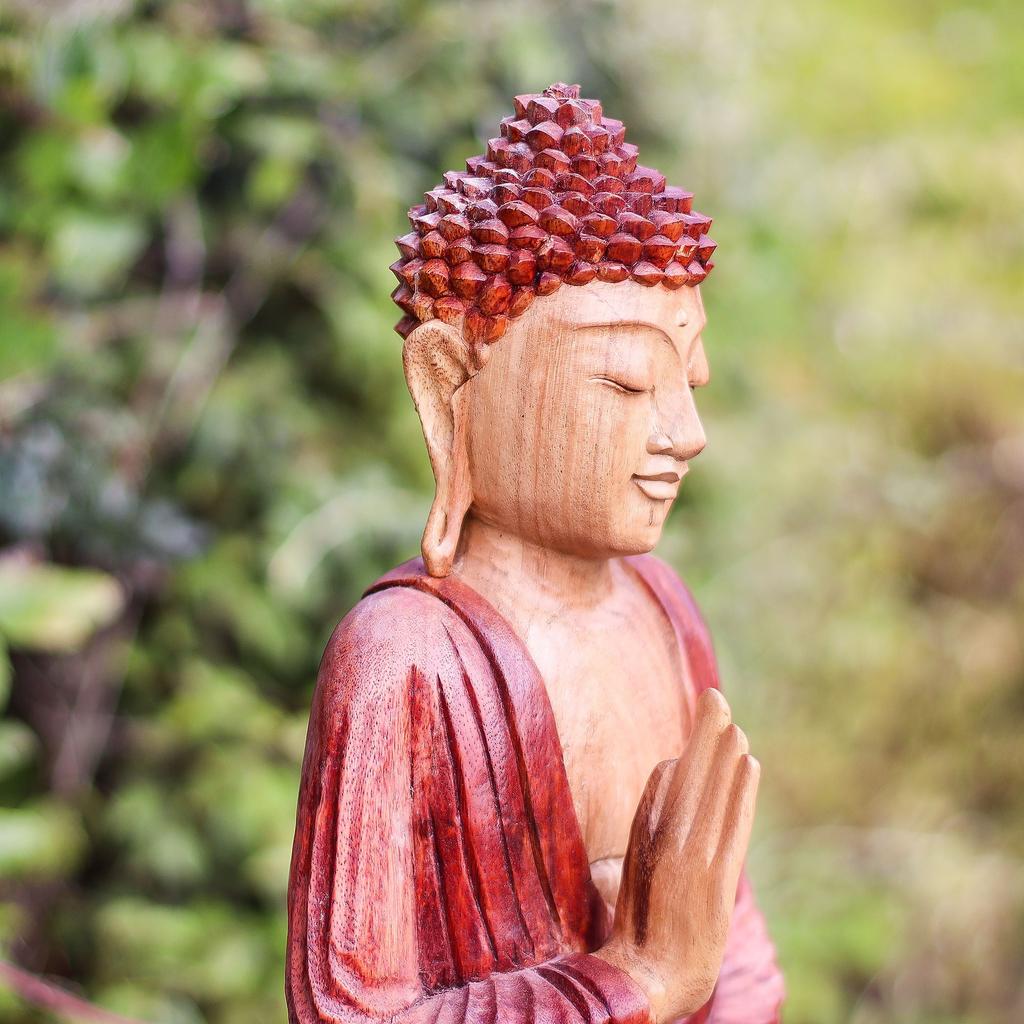
De gesneden gewaden en het gezicht nodigen uit tot langzamer kijken, met details die zich geleidelijk onthullen.
Het royale gewicht geeft het een stabiel gevoel wanneer het op een stabiel oppervlak wordt geplaatst.
Suar hout, met de hand gesneden
Dit standbeeld is gesneden uit suarhout in Indonesië, met behulp van traditionele Balinese handgereedschappen.. Het maken is langzaam en gedetailleerd, waarbij één enkel stuk tot weken nodig heeft om te voltooien.
Omdat elk beeld met de hand is gesneden, zijn geen twee exact hetzelfde.. Kleine verschillen in het houtsnijwerk en de natuurlijke nerf maken deel uit van het karakter, waardoor elk beeldje zijn eigen rustige uitdrukking krijgt.
Hoe het te plaatsen en te verzorgen
Plaats het op een stabiele, vlakke ondergrond waar de uitgesneden details goed zichtbaar zijn zonder dat het te vaak wordt vastgepakt.. Een plank, console tafel of speciale meditatieruimte zal er goed bij passen.
Houd het hout droog en stof het af met een zachte doek. Vermijd langdurige vochtigheid, sterke hitte en agressieve reinigingsmiddelen, aangezien natuurlijk hout het beste zachtjes wordt verzorgd.
Boeddhistische vorm, Balinees handwerk
Boeddhabeelden worden in veel huizen gebruikt als objecten voor contemplatie, devotionele figuren of herinneringen aan aandacht en mededogen.. Dit stuk brengt die symboliek over in de taal van Balisch houtsnijwerk, waar geduldig handwerk en natuurlijk materiaal evenveel gewicht dragen.. De onderwijshouding geeft de figuur een reflectief karakter, gekoppeld aan het moment van het delen van inzicht in plaats van het tonen van…
regio van productie: Indonesië



 Niet geleverd, dan geld terug