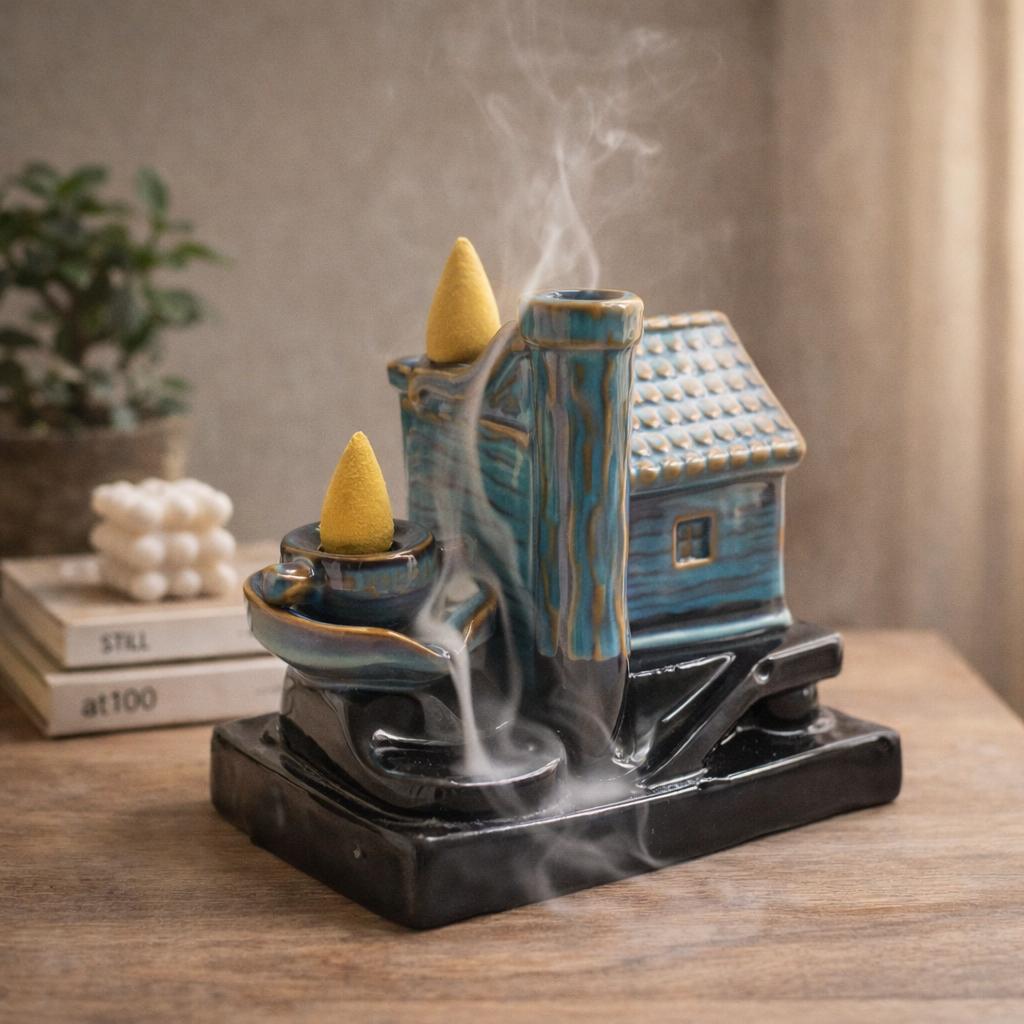
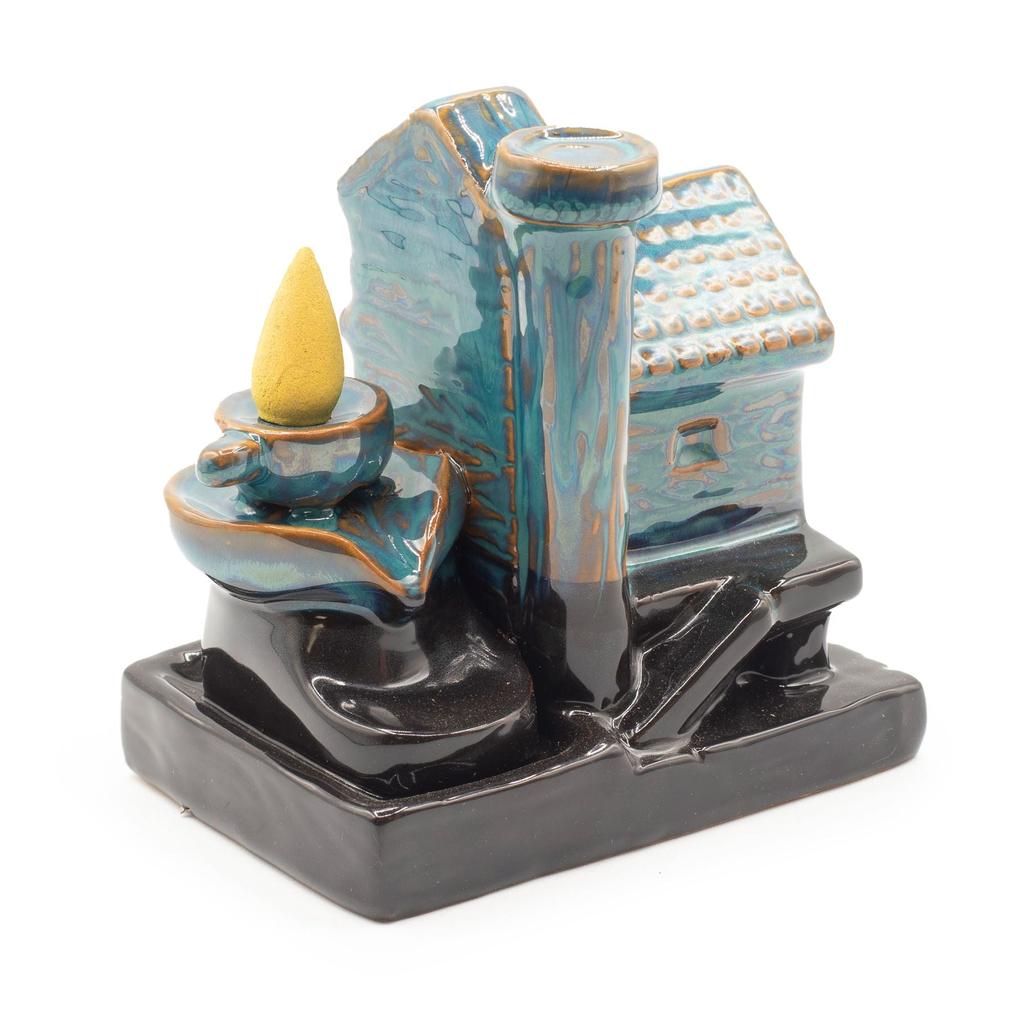
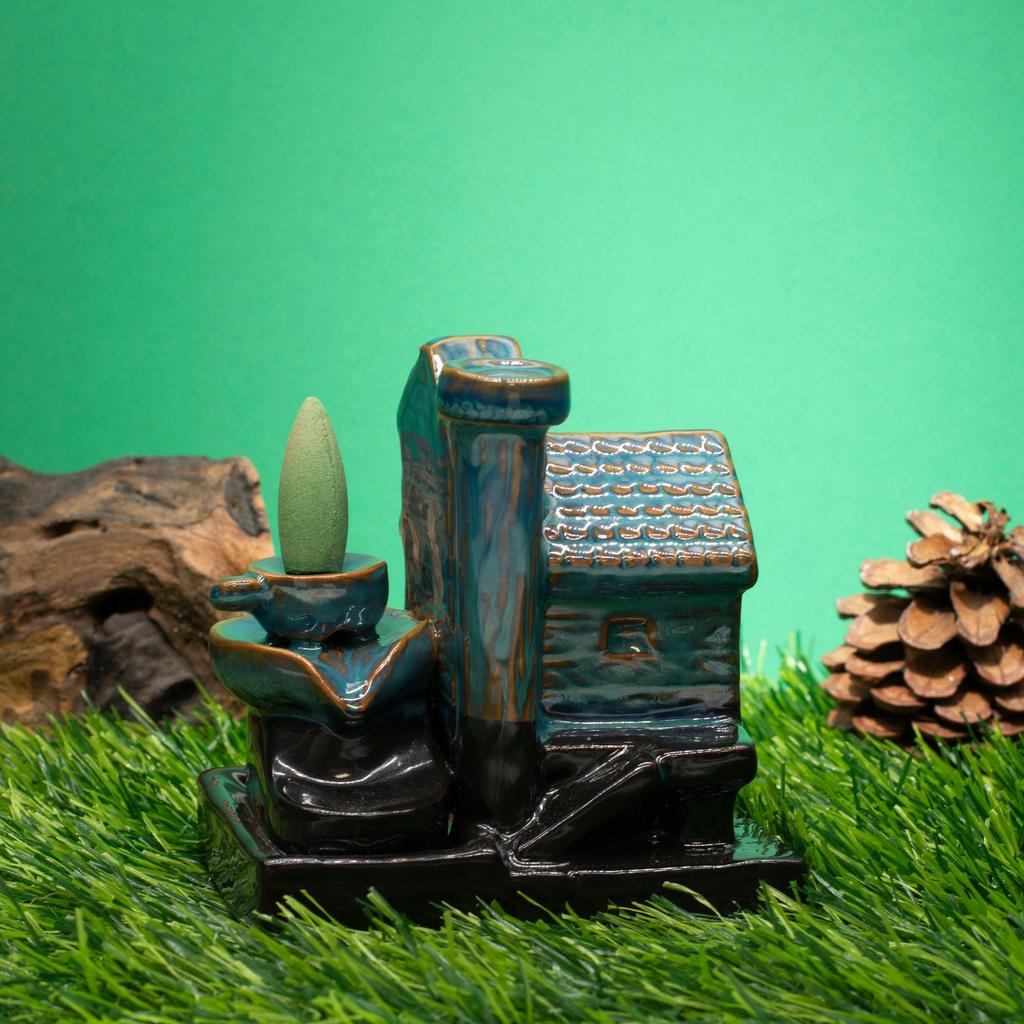
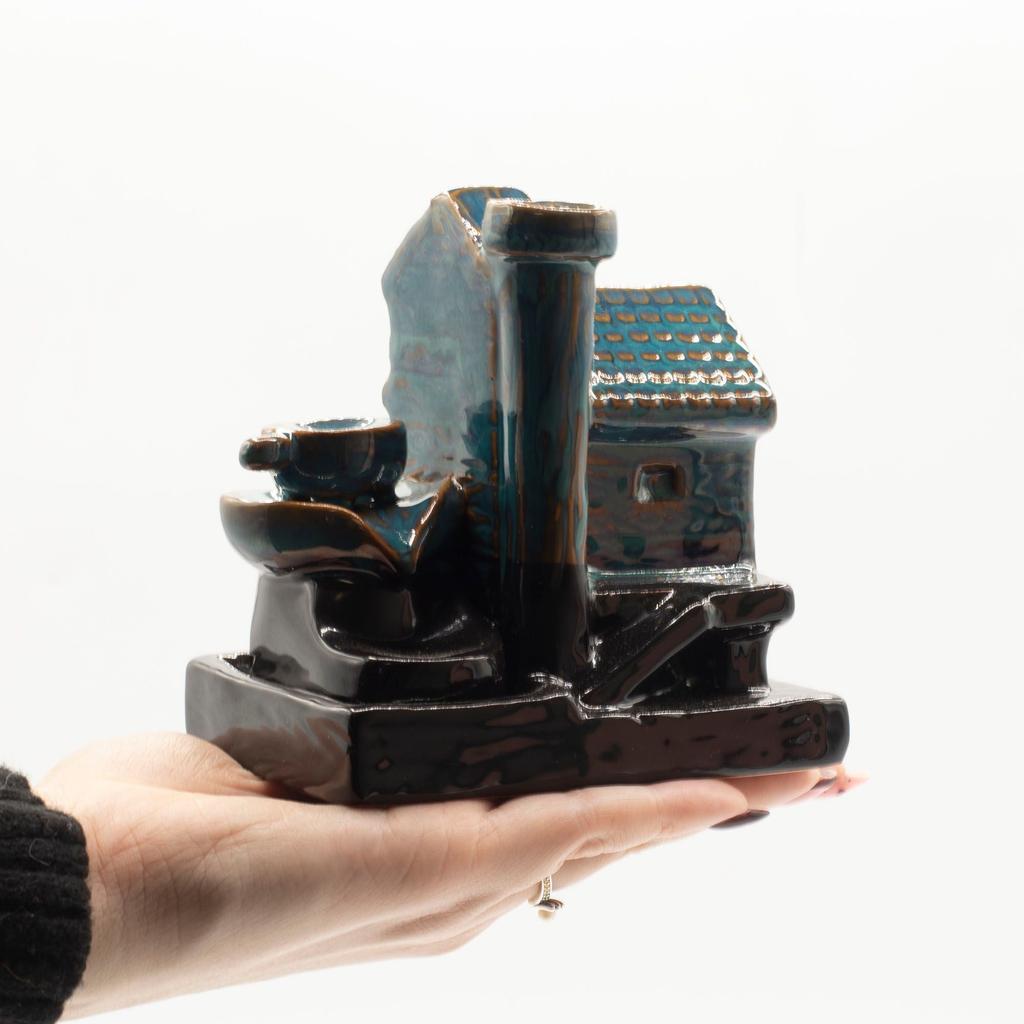
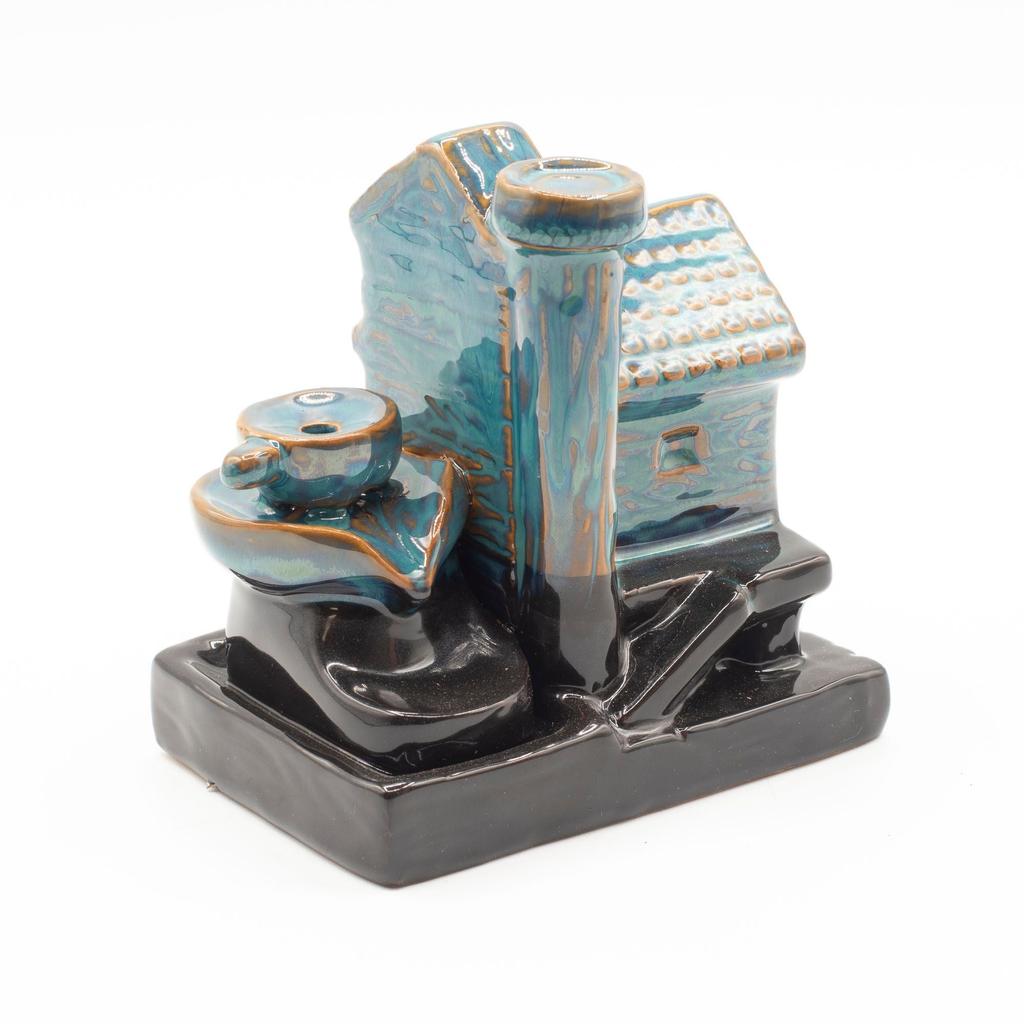
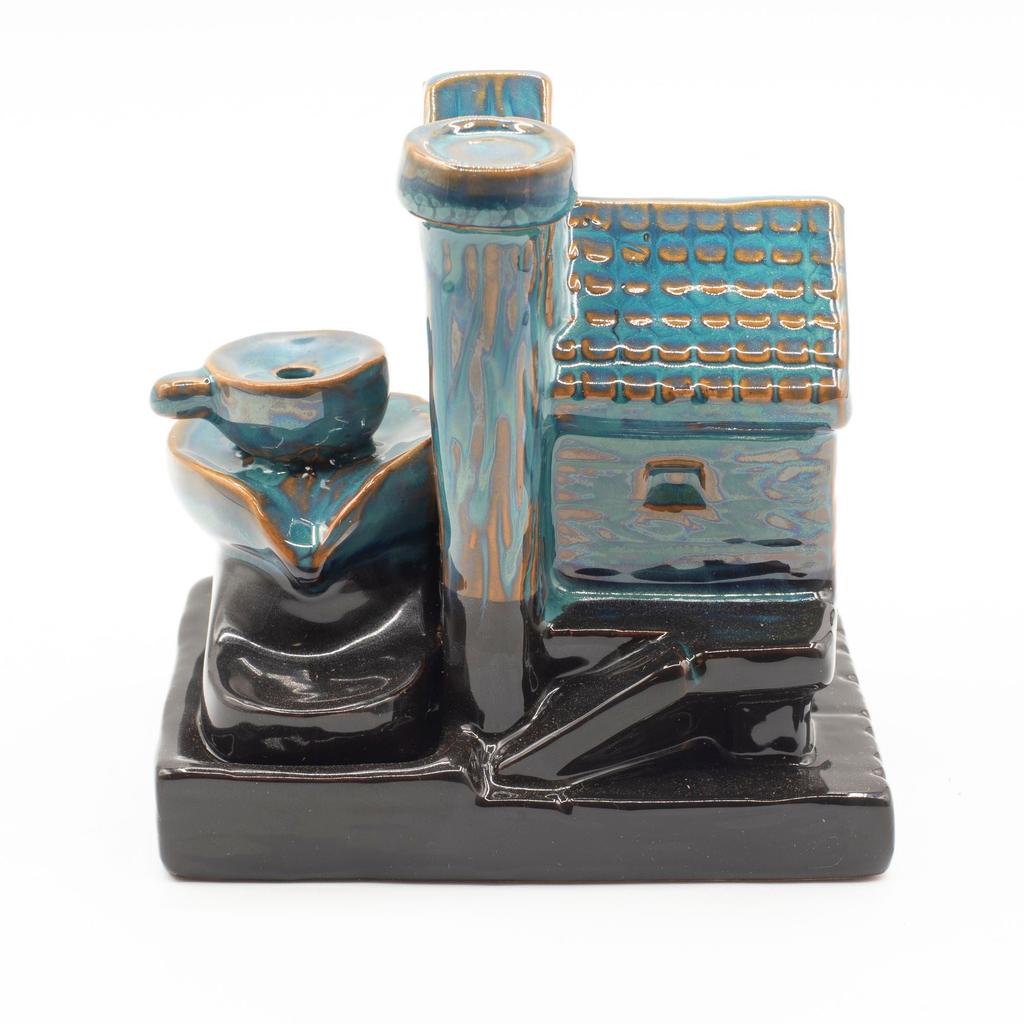
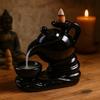
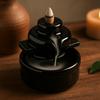
A backflow incense burner in the shape of a watermill house — a miniature architectural scene where incense smoke flows downward like water cascading over the mill, pooling at the base as river mist.
The Watermill House Design
This is the most scenic design in the backflow burner range. Rather than focusing on a single figure — a Buddha, a dragon, an animal — it creates a complete miniature landscape: a small house with a watermill, surrounded by the suggestion of flowing water and countryside. The backflow smoke effect is uniquely convincing here because it mimics exactly what would happen in the real scene it depicts. The smoke cascading downward becomes the waterfall driving the mill; the smoke pooling at the base becomes the river collecting below. It is the design where the smoke effect and the sculptural subject reinforce each other most naturally.
Watermill houses carry associations of rural tranquillity, simpler times, and the gentle hum of preindustrial life. They appear across European folk art, landscape painting, and pastoral literature as symbols of self-sufficiency and harmony with nature. As a decorative object, this burner evokes countryside cottages, fairy-tale villages, and the kind of peaceful, unhurried atmosphere that most people find calming. It is nostalgic without being sentimental — a small, well-made scene that happens to produce a beautiful visual effect.
Who This Appeals To
This design sits in the crossover between backflow incense enthusiasts and people who collect miniature buildings, village scenes, or architectural models. It appeals to anyone drawn to pastoral, countryside, or cottage-style décor — overlapping with the audience for the red mushroom but leaning more toward traditional and rustic tastes rather than whimsical or fairy-tale ones. It also works as a purely decorative display piece for someone who may never burn a cone in it but simply enjoys the craftsmanship of a miniature scene. Of all the backflow burners in the range, this is the one most likely to be mistaken for a decorative ornament first and a functional incense burner second.
Using the Burner
Place on a flat, stable, heat-resistant surface — never directly on painted, polished, or varnished furniture. Light a backflow incense cone, let it catch for 10–15 seconds until the tip glows, blow out the flame, and place the cone on the burner's seat with the hole aligned to the burner's channel. The smoke should begin flowing downward within a minute or two, travelling over the mill structure and settling at the base. Use in a still, draught-free room for the best cascade effect. After use, wipe any oily residue with a damp cloth.
Physical Details
Backflow incense burner — Watermill House design, miniature architectural scene
Resin construction — hand-painted detail
Requires backflow incense cones (sold separately) — standard sticks and cones will not produce the downward smoke effect
Always use on a heat-proof surface
Do not place on painted, polished, or varnished surfaces
Use one backflow cone at a time
Never leave unattended while in use
Keep out of reach of children
A Note on Gifting
The watermill house has an unusually wide gifting range because it does not rely on a specific interest — no spirituality, no gothic taste, no animal obsession required. Anyone who appreciates miniature scenes, countryside aesthetics, or simply well-crafted decorative objects will enjoy it. It is a particularly strong gift for older recipients or anyone who collects ornamental buildings and village scenes. Pair it with backflow cones in a warm, earthy scent — sandalwood, cinnamon, or cedarwood — to match the rustic mood.
Common Questions
Does the smoke look like a waterfall on this design?
Yes — this is one of the designs where the smoke effect most closely mimics what it is meant to represent. The smoke flows down over the mill structure and gathers at the base, creating a convincing impression of flowing water and river mist. The effect is strongest in a completely still room with no air movement.
Can I display this without ever burning incense in it?
Absolutely. The sculpted detail and hand-painted finish make it a standalone ornamental piece. Many people display backflow burners as décor and only occasionally light a cone for the visual effect. The watermill design works particularly well in this way because the architectural scene has inherent display value.
How does this compare to the mountain and teahouse designs?
All three are landscape or architectural scenes rather than figurative sculptures. The watermill is the most traditionally European in style — rural, pastoral, cottage-like. Mountain and teahouse designs tend to lean more toward East Asian landscape aesthetics. Choose based on which setting resonates more with your taste or the recipient's décor.
weight: 423 g
feature: Natural Materials
type: Incense Burner