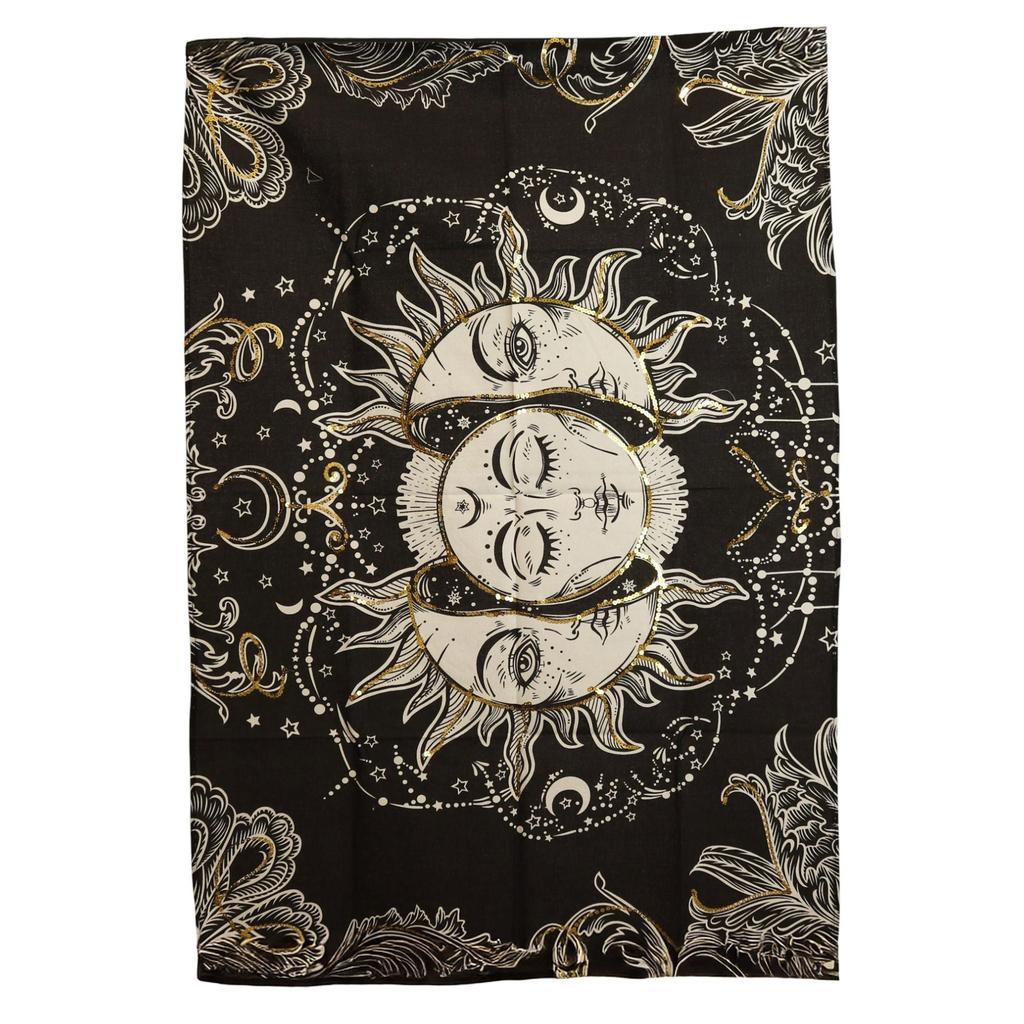
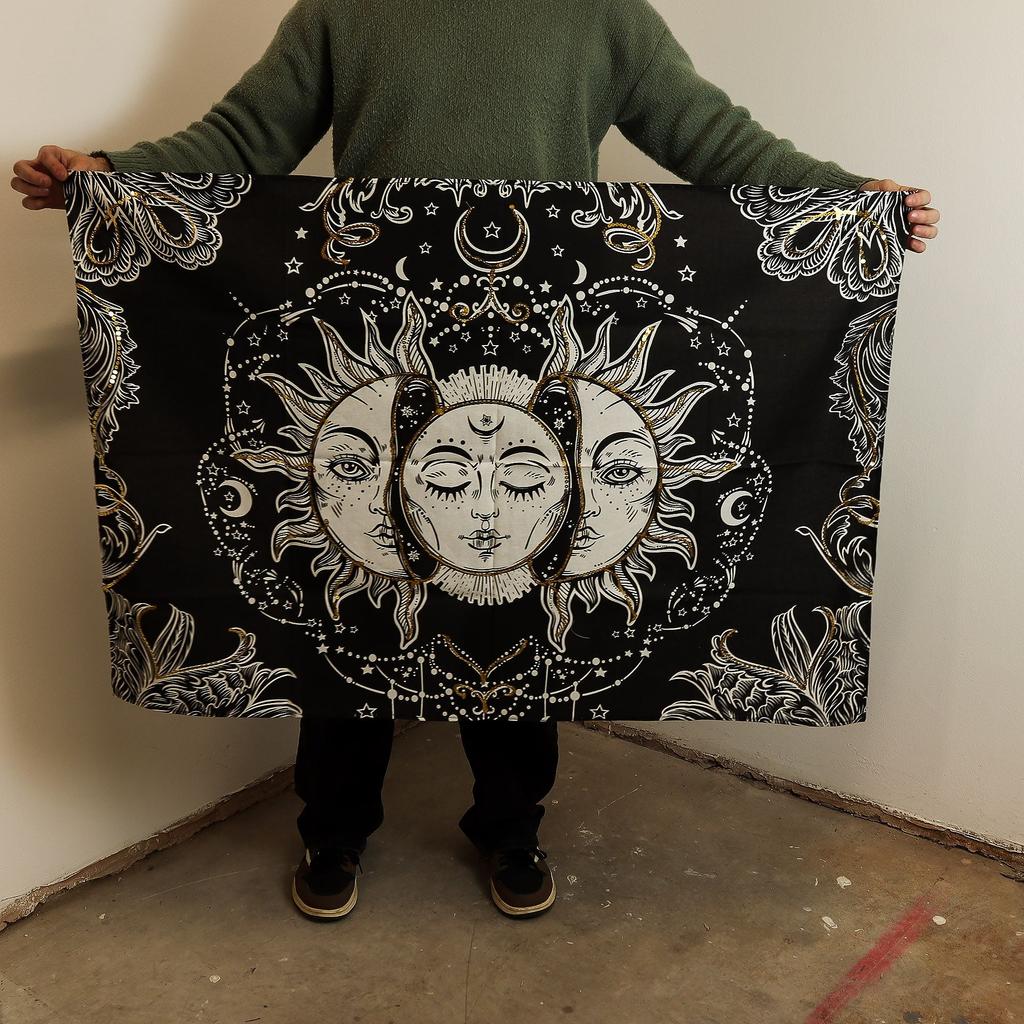
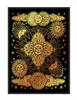
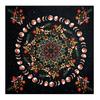
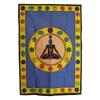
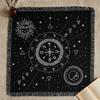
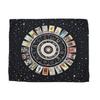
A screen-printed cotton wall hanging depicting a sun goddess figure in gold and white against a deep black background, surrounded by celestial details — stars, moons, and radiating light. The figure is drawn in an ornamental style with flowing hair and outstretched arms, positioned centrally with solar motifs emanating outward. The overall effect is bold and high-contrast: metallic gold and clean white on solid black. It measures 70cm wide by 110cm tall, weighs 95 grams, and is made in India.
What Stands Out
The black background does most of the work here. It pushes the gold and white elements forward sharply, giving the image a luminous quality even in a dimly lit room. Where lighter-background hangings can get lost on a white or cream wall, this one holds its ground — the black border acts like a built-in frame that defines the edges clearly against any wall colour.
The gold tones in the design catch ambient light. Under a warm lamp or in candlelight, the gold areas pick up a slight glow that shifts the image from flat print to something with more visual depth. This makes it particularly effective in bedrooms, yoga studios, or any room lit by warm, low-level light in the evenings.
At 70 × 110cm, the hanging is large enough to be a focal point but narrow enough for spaces where a wide landscape print wouldn't fit. It fills vertical wall space — above a bed, beside a doorway, in a narrow hallway, between windows — without needing a large unbroken stretch of wall.
The cotton is unlined and lightweight at 95 grams. It drapes with a soft fall rather than hanging rigid, which gives it a textile warmth that framed art doesn't have. It's also silent — no glass to rattle, no frame to knock against the wall if a door slams.
The celestial details surrounding the central figure — stars, crescents, radiating lines — fill the composition so there's no wasted or empty space. The design uses the full 70 × 110cm surface, which means it looks finished and intentional at its printed size rather than like a small image on a large cloth.
Screen-Printed Cotton
The image is applied to lightweight cotton fabric using screen printing, a method that pushes ink through a mesh stencil onto the cloth. This produces a flat, matte image with solid colour areas and crisp edges. The gold in the design is printed ink, not metallic thread or foil — it reads as gold because of the warm tone and the contrast against the black, not because the surface is reflective. The black background is part of the print rather than the natural fabric colour.
The cotton is hemmed at the edges and left unlined. The fabric has a natural, slightly textured hand — it's not coated or glossy. Made in India, where screen-printed cotton textiles have been a major craft export for decades. The print is on one side only; the reverse shows a faded version of the image.
Hanging and Looking After It
No hanging hardware is included. The fabric is light enough for small pins, tacks, or adhesive hooks. You can also clip it to a decorative hanger, thread a dowel through a sewn pocket if you add one, or use bulldog clips on a nail for a more informal look. The soft drape means it doesn't need to hang perfectly flat to look good — a slight bow or gentle wave in the fabric adds to the textile character.
The black-and-gold palette suits rooms with warm lighting and darker or richer wall colours particularly well, but the high contrast means it also works against white, grey, or pale walls where it provides a strong visual anchor. It pairs naturally with candles, incense holders, crystals, and other items with spiritual or contemplative associations, though it works equally well as standalone décor in any room where you want something bold and detailed on the wall.
Hand wash gently in cold water if needed, or wipe with a damp cloth. Do not machine wash — the printed surface will degrade. Avoid prolonged direct sunlight, which will fade the black background first and reduce the contrast that makes the design work. The gold tones are the most resilient part of the colour palette, but they too will soften with sustained UV exposure.
Sun Goddesses Across Cultures
The modern tendency is to associate the sun with masculine deities and the moon with feminine ones, but that split is relatively recent in the long history of sun worship. Many of the oldest solar traditions placed a goddess at the centre. In Japan, Amaterasu — one of the most important deities in the Shinto tradition — is a sun goddess and the claimed ancestor of the imperial family. In Norse mythology, Sól (also called Sunna) drives the sun's chariot across the sky; the English word "sun" itself derives from her Old English name, Sunne. In Baltic tradition, Saulė was among the most important deities in pre-Christian worship. In ancient Egypt, several of the earliest sun deities were godd